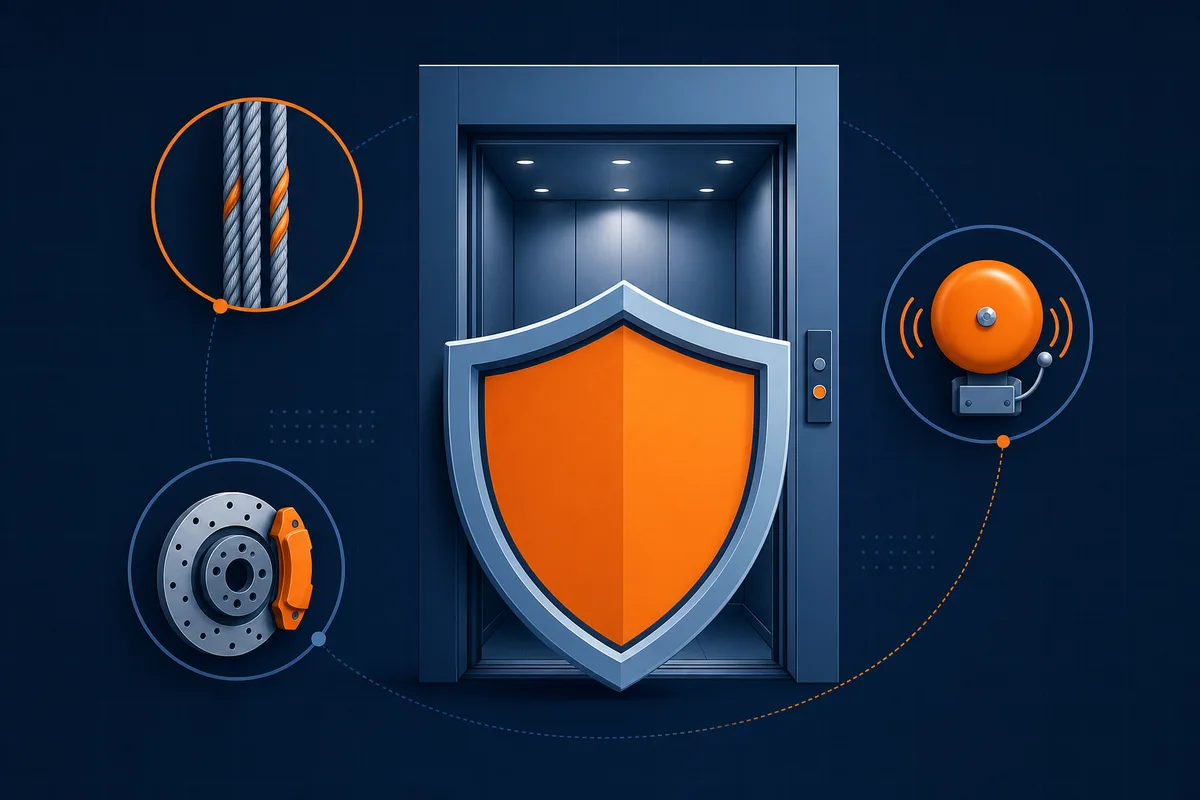
Asansör düşer mi?
Asansör güvenliği hakkında en çok sorulan soru budur. Modern asansörler, tek bir parçaya güvenerek çalışacak şekilde tasarlanmaz. Kabini taşıyan askı sistemi, fren mekanizması, hız regülatörü, paraşüt fren tertibatı, kapı kilitleri ve güvenlik devreleri birlikte çalışır. Bu çoklu güvenlik yaklaşımı, asansörün kontrolsüz hareket etmesini önlemek için vardır.
Gündelik dilde "asansör düşer mi" sorusu korku yaratsa da teknik olarak doğru yaklaşım, güvenlik sistemlerinin düzenli bakımla çalışır durumda tutulmasıdır. Paraşüt tertibatı, kabinin normal dışı hızlanması gibi ciddi bir durumda raylara tutunarak güvenli duruş sağlamaya yönelik bir sistemdir. Hız regülatörü bu anormal hareketi algılayan kritik bileşenlerden biridir. Fren sistemi ise kabinin kontrollü duruşunda görev alır.
Burada kullanıcıya düşen görev, şüpheli belirtileri önemsemektir. Ani duruş, kat seviyesinde belirgin hata, kapıların zorlanması, alışılmadık ses, kabinde titreme veya sık arıza görülüyorsa yönetim bakım firmasına haber vermelidir. Düzenli asansör bakım hizmeti, bu güvenlik zincirinin temel şartıdır.
Bina yönetimi de güvenliği yalnızca arıza olduğunda gündeme almamalıdır. Bakım formlarını düzenli saklamak, kullanıcı şikayetlerini yazılı toplamak ve Asansör Periyodik Kontrol Yönetmeliği kapsamındaki periyodik kontrol raporlarını bakım firmasıyla birlikte okumak riskleri erken görünür kılar. Böylece güvenlik sistemleri ihtiyaç anında değil, ihtiyaç doğmadan önce değerlendirilmiş olur.
Asansör halatı kopar mı?
Asansör halatları, sistemin yük taşıma görevini üstlenen önemli parçalardır. Modern asansörlerde genellikle çoklu halat yedekliliği bulunur; yani kabin tek bir halata bağlıymış gibi düşünülmemelidir. Halatların durumu bakım sırasında izlenir, aşınma, tel kırığı, uzama ve kasnak uyumu gibi başlıklar kontrol edilir. Gerekli görüldüğünde halat değişimi planlanır.
Bu konuda korku yaratmak yerine doğru bilgiye odaklanmak gerekir. Güvenli işletmede önemli olan halatların periyodik olarak kontrol edilmesi, askı sistemi ve fren mekanizmasının birlikte değerlendirilmesi, hız regülatörü ve paraşüt tertibatının çalışır durumda kalmasıdır. Asansör güvenliği bir parçanın sağlamlığına değil, tüm sistemin düzenli bakım ve kontrolle izlenmesine dayanır.
Yönetim, bakım raporlarında halat ve askı sistemiyle ilgili uyarıları ertelememelidir. Periyodik kontrol raporlarında bu tür uygunsuzluklar varsa giderim planı yapılmalı, gerekiyorsa asansör revizyonu değerlendirilmelidir.
Asansörde elektrik kesilirse ne olur?
Elektrik kesintisi, kullanıcılar için tedirgin edici olabilir; ancak doğru sistemlerde bu durum için acil aydınlatma, alarm, haberleşme ve bazı uygulamalarda otomatik kurtarma düzenleri bulunabilir. Kesinti anında kabin durabilir veya sistem güvenli konuma geçmek için tasarlanmış prosedürleri çalıştırabilir. Hangi ekipmanın bulunduğu asansörün yaşına, tipine ve teknik donanımına bağlıdır.
Kullanıcının yapması gereken ilk şey sakin kalmaktır. Kabin içinde hava hemen tükenmez; panik, yanlış karar riskini artırır. Alarm veya acil çağrı butonuna basılmalı, varsa interkom üzerinden yardım istenmeli ve bina yönetimi ya da servis ekibiyle iletişim kurulmalıdır. Telefon çekiyorsa doğrudan asansör servis hattı aranabilir.
Kapıyı zorlamak, kabin ile kat arasında boşluk varsa çıkmaya çalışmak veya tavan kapağı gibi alanlardan müdahale etmeye kalkmak tehlikelidir. Kurtarma işlemi eğitimli kişiler tarafından yapılmalıdır.
Asansörde mahsur kalınca ne yapılmalı?
Mahsur kalma durumunda en güvenli davranış sıralaması nettir: panik yapmayın, alarm veya acil butonuna basın, iletişim kurun, kapıyı zorlamayın ve kendi başınıza çıkmaya çalışmayın. Özellikle kendi başına çıkmaya çalışma, en tehlikeli hatalardan biridir. Kabin kat seviyesinde görünse bile hareket edebilir veya kabin ile kat arasında riskli boşluk bulunabilir.
Kabin içinde beklerken kullanıcılar mümkün olduğunca sakin kalmalı, çocuklar ve yaşlılar varsa onları rahatlatmalıdır. Birden fazla kişi varsa herkesin kapıdan uzak durması iyi olur. Servis ekibi veya yetkili kişi gelene kadar talimat beklenmelidir. Müdahale geldiğinde kapı açılır açılmaz kontrolsüz çıkmak yerine görevlinin yönlendirmesi izlenmelidir.
Bina yönetimi açısından mahsur kalma olayları kayıt altına alınmalıdır. Hangi saat oldu, sistem hangi katta durdu, alarm çalıştı mı, haberleşme sağlandı mı, servis ne kadar sürede geldi, tekrar eden bir arıza var mı? Bu bilgiler bakım firmasının doğru teşhis koymasını sağlar.
Mahsur kalma sonrası asansör hemen normal kullanıma açılmadan önce arızanın nedeni anlaşılmalıdır. Basit bir elektrik kesintisi, kapı kontağı sorunu veya kumanda hatası farklı çözümler gerektirir. Yönetim, servis ekibinden kısa ve anlaşılır bir açıklama almalı; kullanıcıları panik yaratmadan bilgilendirmelidir.
Depremde asansör kullanılmalı mı?
Deprem sırasında asansör kullanılmamalıdır. Sarsıntı anında elektrik kesintisi, kat seviyesinde duramama, ray veya kapı sistemlerinde hasar, bina hareketi ve tahliye yoğunluğu gibi riskler oluşabilir. Deprem hissedildiğinde asansöre binmek yerine güvenli davranış kuralları ve bina acil durum planı uygulanmalıdır.
Depremden hemen sonra da asansörün güvenli olduğu varsayılmamalıdır. Bina yönetimi, gözle görülür hasar, kapı problemleri, olağandışı ses veya çalışma bozukluğu varsa asansörü kullanıma kapatmalı ve teknik kontrol istemelidir. Kullanıcıların "çalışıyor gibi görünüyor" diyerek asansörü denemesi doğru değildir.
Özellikle yoğun konut siteleri ve iş merkezlerinde deprem sonrası iletişim planı önemlidir. Yönetim, asansörlerin ne zaman ve kim tarafından kontrol edileceğini önceden belirlemeli, sakinleri açık şekilde bilgilendirmelidir.
Asansör güvenliğini kullanıcılar nasıl destekler?
Kullanıcı davranışı da güvenli işletmenin parçasıdır. Kabin kapasitesini aşmamak, kapıyı elle zorlamamak, çocukların butonlarla oynamasına izin vermemek, yük taşırken kapı ve kabin yüzeylerine zarar vermemek, arıza belirtisini yönetime bildirmek basit ama etkili adımlardır. Asansör bir oyuncak veya depo ekipmanı gibi kullanılmamalıdır.
Taşınma, tadilat veya yoğun yük taşıma dönemlerinde yönetim ayrıca dikkatli olmalıdır. Yolcu asansörü sürekli ağır yük için kullanılacaksa kapı, kabin tabanı ve seviyeleme sistemi zarar görebilir. Bu dönemlerde kullanım kuralları duyurulmalı, gerekiyorsa servis firmasıyla ön kontrol planlanmalıdır.
Etiketlerin görünür olması ve raporların takip edilmesi de önemlidir. Kırmızı, sarı, mavi ve yeşil etiketlerin anlamlarını bilmiyorsanız asansör etiket renkleri rehberini okuyabilirsiniz. Periyodik kontrol, aylık bakımın yerine geçmez; iki süreç birbirini tamamlar.
Düzenli bakım güvenlik sistemleri için neden şarttır?
Paraşüt tertibatı, hız regülatörü, fren, kapı kilitleri, acil haberleşme, aydınlatma ve kumanda devreleri düzenli bakım yapılmadığında güvenilirliğini kaybedebilir. Asansörün bugün sorunsuz çalışması, bakımın gereksiz olduğu anlamına gelmez. Güvenlik sistemleri ihtiyaç anında doğru çalışsın diye önceden kontrol edilir.
Oluşum Asansör, Bursa ve çevresinde düzenli bakım, periyodik kontrol hazırlığı, revizyon değerlendirmesi ve 7/24 arıza servisiyle bina yönetimlerine destek verir. Asansörünüzde mahsur kalma, sık arıza, etiket uygunsuzluğu veya güvenlik şüphesi varsa bize ulaşın; sistemi teknik olarak inceleyelim, can güvenliğini önceleyen çözümü birlikte belirleyelim.